Rain, Neon, and Skin: Why the City Won Hentai's Aesthetic War
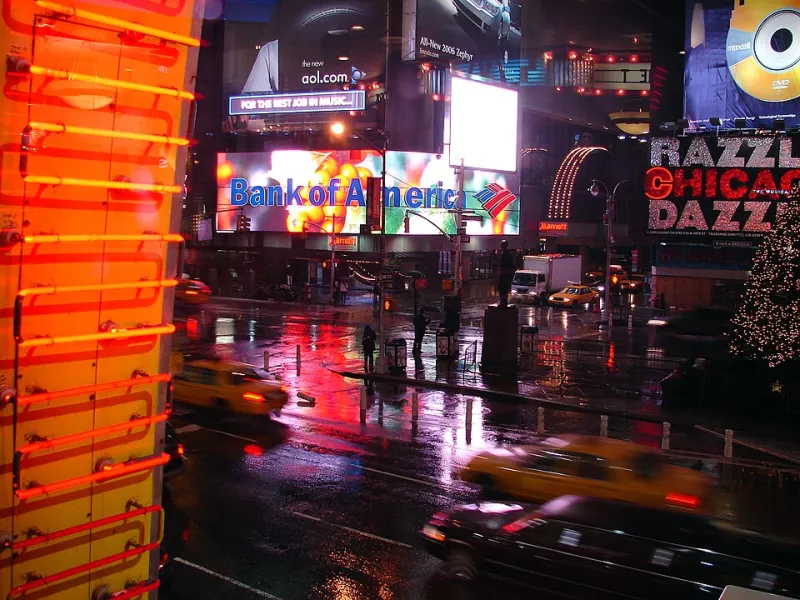
Photo: Diego Torres Silvestre from Sao Paulo, Brazil, CC BY 2.0, via Wikimedia Commons
Let's just say it up front: the pastoral era of adult anime is over, and the city killed it.
Not literally, of course. Idyllic countryside romances and beach-episode erotica still exist, and there's nothing wrong with them. But scroll through any major doujin marketplace or studio portfolio today and the pattern is unmistakable — rain-slicked streets, vending machine glow, chain-link fences, neon kanji reflecting in puddles. The city isn't just a setting anymore. It's the whole mood.
From Flower Fields to Fire Escapes
Older hentai, especially the VHS-era stuff we've covered before, leaned heavily on pastoral and domestic backdrops — school gardens, tatami rooms, sunny rooftops. It made sense. The genre grew out of romance manga conventions, and romance manga loved its flower petals and soft light.
Then two things happened. First, cyberpunk went global. Blade Runner and Akira fused into a single shared visual language — oppressive megacities, glowing signage, perpetual rain. Second, digital art tools made painting complex urban backgrounds dramatically easier. Why draw a hedge when you can render an entire alleyway of glowing signage in half the time?
By the 2010s, the shift was complete. The default erotic anime setting wasn't a bedroom with the lights off. It was a back street at 2 AM, everything wet, everything glowing.
Why It Hits Different for American Fans
Here's my theory, and I'll die on this hill: US audiences were primed for this look by decades of noir and cyberpunk. We grew up on Sin City panels, Blade Runner posters in every college dorm, and video game cityscapes from Grand Theft Auto to Cyberpunk 2077. Neon-drenched urban decay reads as sexy to us in a way a sunlit meadow simply doesn't.
There's also the intimacy factor. A city at night is anonymous and crowded and lonely all at once — perfect conditions for the kind of charged, secretive encounters that adult anime specializes in. A meadow promises romance. An alley promises trouble. Guess which one sells more copies.
The Artists Owning the Look
A few names and studios keep coming up when fans talk about the modern urban aesthetic:
- Kawajiri's descendants — Every artist who paints a lone figure under a flickering sign owes something to Wicked City. His DNA is everywhere.
- Doujin circles with cinematic backgrounds — A wave of indie artists became famous specifically for their environmental detail. Their characters feel like they inhabit a city, not a void with a skyline sticker.
- Modern studios — Recent original productions have pushed rain, reflections, and volumetric neon lighting to a level old cel animation couldn't touch. The tech finally caught up to the vision.
The Backlash, and Why It Won't Stick
Every trend breeds a counter-trend, and sure, some fans are tired of 'every hentai looks like a cyberpunk loading screen.' Fair. But the urban aesthetic isn't a fad — it's a convergence of what artists can draw, what tools make easy, and what two generations of fans were raised to find beautiful.
The rain isn't stopping. Grab an umbrella.