Clause and Effect: What Your Lease Actually Says About Your Hentai Shelf
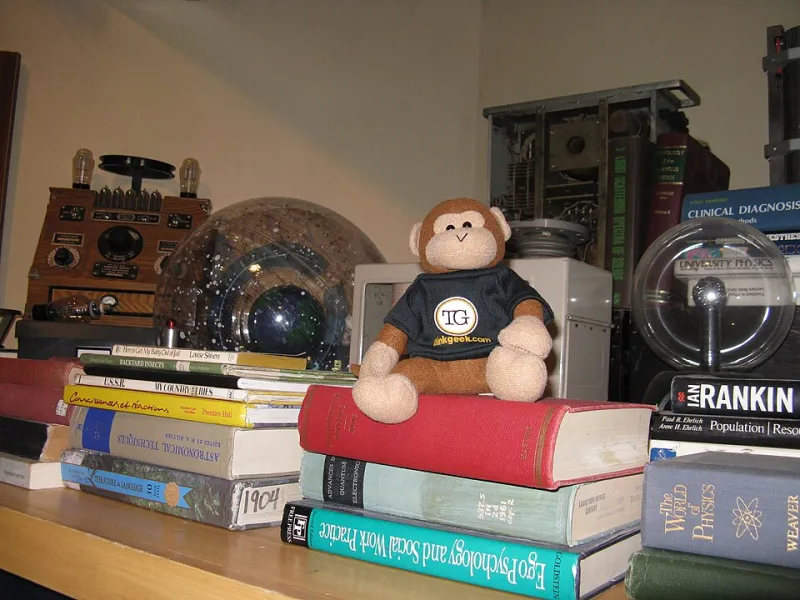
Photo: NASA Blueshift, CC BY 2.0, via Wikimedia Commons
The shelf in Marcus's apartment in Columbus is beautiful. IKEA birch, glass doors, LED strip he installed himself, three years of careful collecting arranged by series and scale. It's also, technically, a lease violation.
"There's a line in my lease about 'no commercial merchandise or displays,'" he told me over Discord voice chat, laughing the way you laugh when a thing stopped being funny a while ago. "My landlord saw it during an inspection and asked if I was running a store. I said no. He said okay. We both pretend that conversation ended there."
Marcus isn't alone. Across American rentals — from pre-war walk-ups in Chicago to the endless garden apartments of Phoenix — adult collectors are living with a strange, mostly unspoken tension: the stuff they own sits inside property they don't.
The Clause That Means Nothing (and Everything)
Here's the thing most renters don't realize: there is essentially no such thing as a standard "no hentai" lease clause. What there are are vague, catch-all provisions — "no business use of premises," "no offensive displays visible from outside," "landlord's right of reasonable entry" — that can get stretched over an adult collection depending on how petty or curious everyone involved decides to be.
"I've read thousands of leases," says Dana Okafor, a tenant-rights attorney in Ohio who agreed to talk generally about the issue. "I've never seen one that specifically bans adult collectibles. What I have seen is landlords try to weaponize generic clauses when there's already a conflict. The collection is almost never the real problem. The real problem is the landlord already wants you gone."
In other words: your shelf of 1/6 scale figures isn't illegal. It's just leverage.
Okafor's practical advice is almost boring in its common sense. Keep the collection inside the unit, out of windows. Document everything you own in case of a dispute over damage or entry. And never, ever volunteer information during an inspection that wasn't asked for.
"A landlord's right of entry is for inspection, repairs, showing the unit," she says. "It is not a curatorial walkthrough. You're allowed to close a bedroom door."
The Roommate Problem Is Worse Than the Landlord Problem
If landlords are a distant, occasional threat, roommates are a daily negotiation. The shared living room shelf — that great American experiment in communal display — is where most of these conflicts actually live.
A woman I'll call Jess, a grad student in Minneapolis, learned this the hard way when she moved into a three-bedroom with two people she found on Facebook. Her collection — mostly doujinshi and a handful of box figures — lived on a shelf in the common area because her room couldn't fit it.
"One roommate thought it was hilarious. The other started putting a decorative towel over it whenever her mom visited. Then the towel just... stayed. Forever. It's a towel shrine now. I've accepted it."
There's no lease clause for that. There's no statute. There's just the slow, grinding diplomacy of shared space, which every American renter knows is the actual legal system of adult life.
What the Landlord Actually Thinks
I talked to one landlord — a guy named Ray who owns six duplexes in the Tampa area — mostly because he answered his phone and had opinions.
"You know what I care about?" he said. "Water damage. Fire code. Whether the smoke detectors have batteries. If a tenant has a shelf of anime stuff, my honest reaction is I don't understand it and I don't need to. The only time it becomes my business is if it blocks an egress window, smells, or looks like a retail operation."
Ray's one hard line, he says, is anything that a prospective tenant on a showing might see and that he would then have to explain. "I showed a unit once where the guy had a wall of it in the living room. Didn't bother me. Bothered the applicant. The unit sat empty three extra weeks. That's a real cost. So now I ask people to keep personal stuff in bedrooms during showings. That's it. That's the whole policy."
Notice that Ray's policy isn't moral. It's logistical. Which, honestly, is the most American resolution possible.
The Uncomfortable Middle Ground
The cultural tension here is real, though, even when the legal one isn't. Renters — especially young ones, especially in big cities — already live in a state of provisional belonging. Your landlord can raise the rent 12 percent. Your roommate can move out with thirty days' notice and take the router. Nothing on your shelf is permanent, including the shelf.
There's something almost poetic about the fact that the most personal part of a collector's life — the stuff that took years and paychecks to assemble — lives at the intersection of everybody else's permissions. The lease, the roommate agreement, the towel over the shelf: these are the small treaties that make a rental feel like a home.
And maybe that's the actual story. The hentai collection in an American apartment is a test case for a question every renter answers daily: how much of yourself do you get to display in a space you're only borrowing?
Marcus, for his part, has a plan. "When my lease renews, I'm asking for the merch clause to be removed in writing. If they won't, I'm keeping the shelf in the bedroom and the good stuff in a storage unit. It's stupid. It's also thirty dollars a month for peace of mind."
The shelf, the lease, the towel, the storage unit — none of it is romantic. All of it is real. And in the gray zone between someone else's property and your private life, real is what you've got.